Parking Lot Line Striping in Sherman, TX
Typical cost: $4 – $20 per stall on a re-stripe depending on lot size; new layouts quoted from the site plan
Sherman is opening new lots faster than any town in Grayson County history — hotel pads on the 75 corridor, retail at Sherman Crossroads, apartment communities by the thousand-unit block — and every one needs a first layout off the approved site plan before the certificate of occupancy walk. Meanwhile the county seat's mature lots, from the courthouse square to the medical corridors, are due their re-stripes. A re-stripe over an existing layout is the fastest, cheapest improvement a commercial property can buy: chalk, machine, fresh traffic-grade paint, and the lot reopens the same night.
New construction is its own discipline. A first-time layout comes off the site plan — stall dimensions, drive aisle widths, accessible stall counts and van aisles, fire lanes, cart corrals, directional arrows — and it has to match what the city approved, because the certificate of occupancy inspection will check. With the amount of retail, church and school construction moving up the 75 and 82 corridors right now, getting the striping contractor involved before the asphalt cures saves everyone a second mobilization.
We stripe with DOT-grade traffic paint, stencil the stalls, arrows, visitor and no-parking markings, and paint curbs where the plan calls for them. For property managers running multiple sites, we bid the portfolio as a route — one contract, one schedule, every lot on a cycle instead of a crisis.
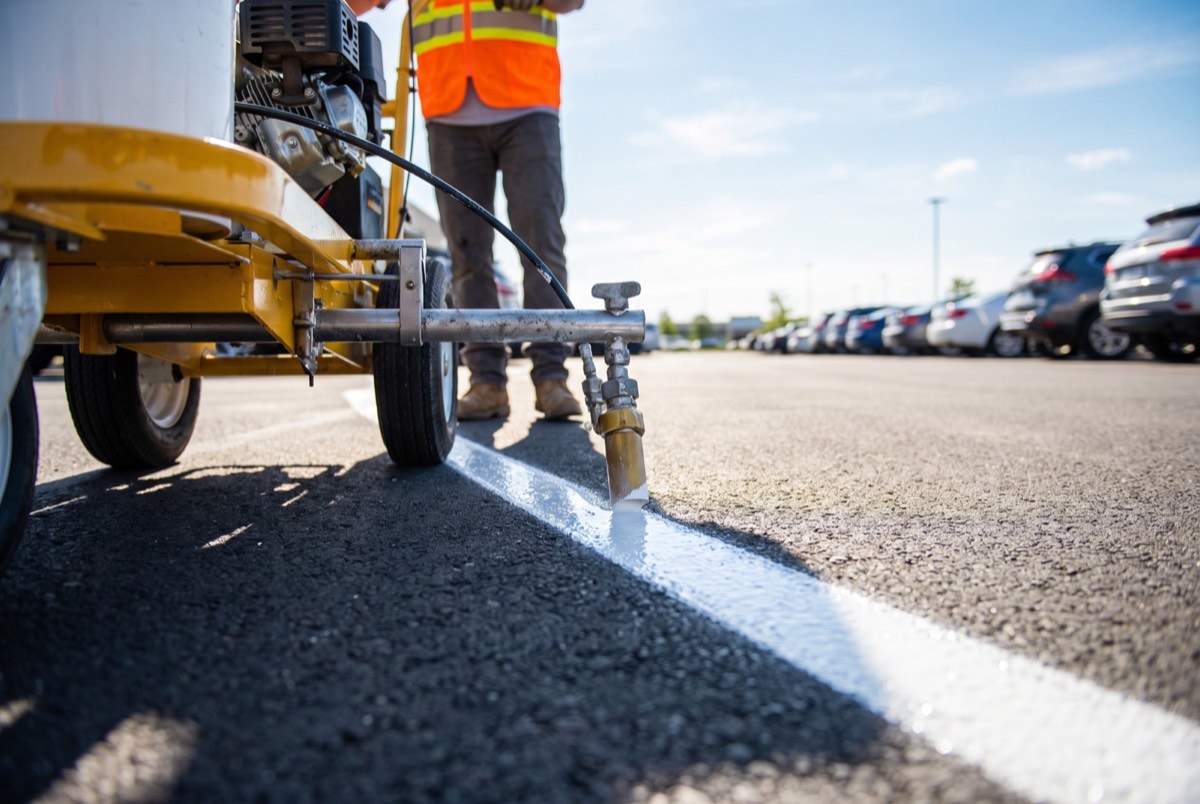
Machine-laid DOT-grade paint - straight lines, clean edges, dry within the hour.
What is included
- Re-stripes over existing layouts, usually completed overnight
- New layouts from the site plan for construction projects
- Stencils, arrows, curbs, cart corrals and custom markings
- DOT-grade traffic paint, machine-applied lines
- Portfolio pricing for property managers with multiple sites
From site plan to certificate of occupancy
On new construction — and Sherman has more of it right now than the rest of the trade area combined — striping is the last item before the occupancy walk, and the one with no float left in the schedule. The sequence that works: we get the approved site plan while paving is still underway, confirm the stall dimensions, accessible stall count, van aisles and fire lane routing against what the city reviewed, and schedule the layout for after the asphalt has set. The crew shoots the layout from the plan's control points, chalks it, and stripes it, accessible signage and fire lane lettering included, so the inspector's walk-through finds the lot the drawings promised. When the GC tells us the target CO date up front, striping has never been the reason a Sherman project missed it.
Hotels and apartment communities
The two property types leading Sherman's build-out have their own striping logic. Hotels concentrate everything at the front door: van-accessible stalls on the shortest accessible route, a fire lane wrapping the building that the marshal will walk, and a drop-off zone that has to stay legible through constant turnover. Apartment communities are a numbering job as much as a painting job — assigned stalls stenciled in sequence, visitor stalls marked and counted to the city's ratio, covered-parking rows, and the tow-away zones leasing offices need enforceable. We stripe both from the plan on new builds and re-stripe them on cycles after — and a community's worth of stall numbers is exactly the kind of work that goes faster and cheaper when the same crew did the original layout.
Re-striping the older lots around the square
The county seat's mature asphalt asks different questions. Lines worn to shadows first need a judgment call: follow the old layout, or fix what decades of restripes baked in — stalls that predate accessibility standards, ghost lines from a layout two owners ago bleeding through. Where ghosting confuses drivers we black out the dead lines before painting the live ones, and oil-stained stalls get a primer coat so the paint holds instead of peeling. It is a few more steps than paint-over-what-is-there, and it is the difference between a re-stripe that looks sharp for two years and one that looks tired in six months.
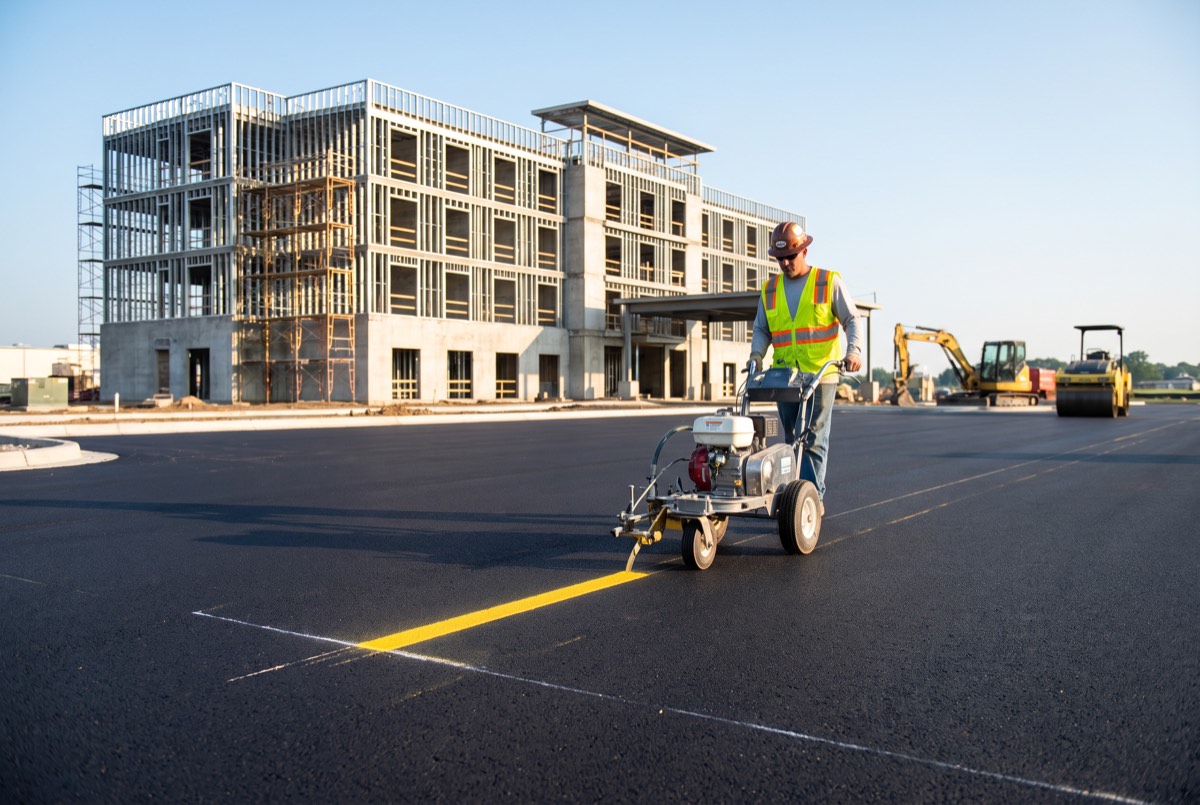
A first layout going down on fresh asphalt - chalked from the approved site plan, striped before the occupancy walk.
Serving Sherman, Denison, Howe, Van Alstyne, Gunter and nearby
This service is available across our full coverage area. See the service area map for the complete list, or call (903) 207-4525 to check a specific address.